Medication-assisted treatment combines FDA-approved medication with ongoing clinical assessment, behavioral health treatment, counseling or counseling referrals, recovery support, and care coordination. For opioid use disorder it has the strongest evidence base of any available approach.
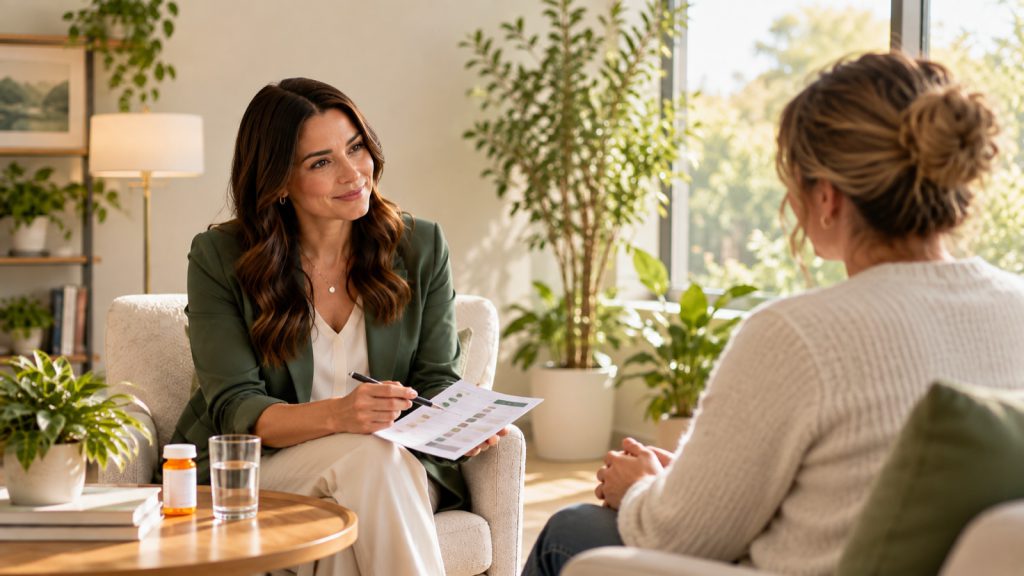
Medication is treatment, not a substitute for it
A persistent myth says that using medication to treat opioid use disorder is “trading one addiction for another”. It is not. Medication-assisted treatment reduces cravings and withdrawal so that the rest of recovery — counseling, work, relationships, housing — becomes possible. Research consistently associates it with lower overdose mortality and better retention in treatment.
What treatment looks like here
- A comprehensive substance use and psychiatric evaluation, and a diagnosis
- Medication initiation and ongoing medication management
- Monitoring of how well the medication is working, how you are managing to take it, side effects, withdrawal symptoms, and cravings
- Toxicology and urine drug screening, where clinically indicated
- Prescription monitoring and medication reconciliation
- Overdose-prevention education, and naloxone education and prescribing where appropriate
- Behavioral health treatment, counseling or counseling referrals, and recovery support alongside the medication
- Continued recovery and relapse-prevention monitoring
- Regular review appointments, in person or by telehealth
- No fixed end date. Treatment lasts as long as it is helping
Medications offered
We provide buprenorphine-based treatment, including buprenorphine/naloxone (Suboxone), where it is clinically appropriate for you. Whether medication is suitable, and which one, is decided after an evaluation rather than in advance.
Medication-assisted treatment here is for opioid use disorder, and for other substance use disorders where it is clinically appropriate. If the right treatment for you is a medication we do not prescribe, or a level of care an outpatient clinic cannot provide, we will tell you and help you get to a program that can — detoxification, residential treatment, intensive outpatient, or an opioid treatment program. See Recovery Support.
Naloxone is a separate thing worth knowing about: it reverses an overdose. We provide overdose-prevention education, and will prescribe naloxone where appropriate, whether or not you are taking anything else from us.
Starting treatment
Call (859) 303-5794 or walk in Monday to Friday, 8:00 am to 4:30 pm. Bring a photo ID and your insurance card if you have one — and if you do not, come anyway.